
People. Perspective. Puppies.
Week 2, Spring 2025: POV

Story Ingredients
Week 2! We’re in it, now.
I want to reveal to you the logic behind the four units of our Comp 2 course as laid out in your syllabus (which you definitely read, right?). Peak behind the curtain. See the machinery of my design.1
There’s a kind of formula I see in my mind, and it goes like this:
character + setting + conflict ~ plot
In other words, a person in a place with a problem makes a story. You will be reading approximately 14 stories this semester and writing one of your own, so we’re going to approach this by hitting each of these “ingredients” one by one. Starting with the people.
POV: An Overview
Something I know to be true from Comp 1: this is not your first point of view rodeo. You all have varying amounts of previous knowledge to draw upon, which is great. This unit, as you think about the character that you are going to create, I want you to think about the options of point of view available to you and select one. Each POV has different strengths and weaknesses.
1. 1st Person POV
This is where the I/we/me/us/my/our pronouns are employed. A lot of YA books are written in 1st person. In fact, a lot of the biggest selling, most successful novels are in the 1st person: your Colleen Hoovers and your Sarah J. Maases and Rebecca Yarroses.
There is an intimacy inherent in this POV because we are being told a story by a character. We see the world through another (fictional) person’s eyes, so there is an opportunity to experience what it is like to process reality in a new way. But writers don’t always live up to this promise. In my opinion, 1st person is often used as a cheap shortcut to access a reader’s empathy without doing any more interesting and nuanced character development. Brandon Sanders, another writing prof writer, completely skewers the entire POV in his provocative critique of all 1st person fiction:

In that Substack article, Brandon writes:
To me, writing fiction in first-person constitutes weirdo behavior.
But people do it—some well, some poorly—and because I teach creative writing in the twenty-first century, I am often forced to ponder the first-person point of view from a technical perspective. To be clear, the word forced is crucial because otherwise, I would not think of first-person fiction at all.
So, kind of an aggressive take, as you can see. It had me reeling a bit, tbh, because in the last couple of years I’ve written two draft and 100,000 words of novel entirely in the 1st person.2 And I super agree with a lot of what he says about interiority, which in my opinion, is the super power of the 1st person. In other words, I expect to inhabit the thoughts of my 1st person narrator and I expect their filter on the world around them color everything. Here’s Brandon again:
The first-person narrator without interiority, subtext, and indeed the very capacity for thought or judgement is the purest expression of the passivity that organizes much of contemporary life. This passivity extends from the realm of the aesthetic into the realms of the personal and the political. We have a generation of writers who have watched more movies, television, and footage of human life than they have experienced of that life firsthand.3 Even their understanding and experience of their own inner lives originates in skits, memes, and video essays. They have no philosophers or prophets. They have YouTubers and influencers, and in this shallow, highly processed and highly mediated experience of consciousness, there is no thought.
Yeah, he’s really not pulling any punches. Suffice it to say, that if you decide to write your story in 1st person, “interiority” will be part of your rubric. This might be the POV for you if you are interested in psychology, if the science of the mind and its inner workings excites you.4 And maybe if you want to prove to Brandon that he is wrong, at least about you:
What I mean is that for the writers of this new era, conveying the contents of a thought or even depicting the process of thought itself in language that does not aspire to the visual has the same foreign, baffling aspect as their trying to use a rotary phone. They simply do not know how to write thoughts. And indeed it sometimes seems as though thoughts themselves are an alien artifact from another time.
2. Second Person POV
This is where we get hit with the you/your/yours pronouns. Most 2nd person writing also blends into other POV: usually, if there is a “you,” there is also an “I.” A recipient and a writer. I recently employed the “you” in a very short microfiction contest. Basically, you get assigned a genre, action, and word, and you have 48 hours to write and submit a piece. It’s fun and weird, like a game and writing. In the second round, I got assigned romance genre, ordering a pizza, and the word “tone.” The character I ended up spinning out was a broken-hearted guy going through the motions of his life.5 And he would address a “you:” his erstwhile lady friend.
And, of course, all of my blog posts use the 2nd person, because these are written for you. I’ve got my readers in mind with every word and sentence I write, and sometimes I shout them out.
There’s another way to use 2nd person, which is a little more outside the lines. There are literary pieces of writing that are basically 100% in the 2nd person. In my experience, the authors of these pieces are usually exploiting the “you” pronouns to kind of force the reader to participate in what is essentially a 1st person essay. This is usually written in the present tense. For example, instead of:
I spilled the coffee and burned my father’s hand. I wondered how long the wound would last. Maybe forever.
It would be:
You spill the coffee and burn your father’s hand. You wonder how long the wound will last. Maybe forever.
If you like this effect, and are of an experimentary nature, you are welcome to try it on for size.
3. 3rd Person POV
Now we’ve arrived at the he/she/they/him/her/them/his/her/their pronouns. Most of the fiction we are reading together will be in the 3rd person. Most of the student short stories I’ve read in my time are also in the 3rd person. According to Brandon, the stuff out there that isn’t 3rd person is “weirdo behavior.”
As I say above, if you choose to write in the 1st person, you will be assessed for interiority. That’s an expectation of 1st POV. If you choose to write in the 3rd person, you can decide how much interiority you include. I do want you to be aware of the level of interiority, though, in the fiction we read and in the fiction we write. This concept might be a new one for you guys, it’s called “narrative distance.” It’s a scale. Close narrative distance means the writer reveals more of the interior life of the character whose perspective we are traveling with, wide narrative distance gives more space.
Here’s some more detail, which I’ve basically copied and pasted from Google AI Overview:6
Close narrative distance
The reader feels more connected to the characters
The reader is in the characters' heads, experiencing the story
The reader is close to the character's thoughts and feelings
Wide narrative distance
The reader is further removed from the characters
The reader is watching events from a distance
The reader sees the characters more objectively
Narrative distance in different points of view
First person: The narrative distance is usually close and intimate
Third person limited: Narrative distance is more advanced and can be manipulated by the author
And here’s another explanation which I created myself:
interiority = access to a character’s inner life
more interiority = closer narrative distance
less interiority = wider narrative distance
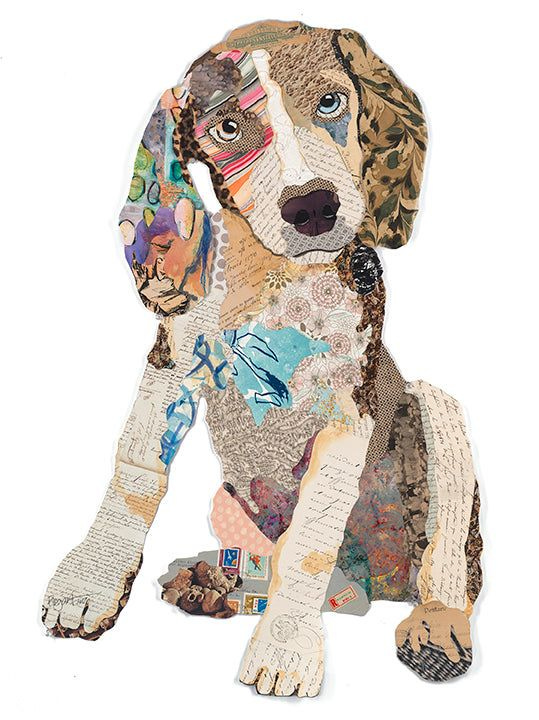
“PUPPY,” by George Saunders
This week, we are going to think about all the above information as it applies to “PUPPY.” Come to class on Monday ready to write about the short story itself. Come to class on Wednesday ready to apply my ^^^ POV discussion to the short story.
Your First Essay Assignment
Your first essay will be Character Analysis. This Saturday, your outline is due. Next Saturday, your first draft is due. The Saturday after that, your final draft is due.
For this essay, you will all be writing about “PUPPY.” Since there are two main characters—Marie and Callie—you have some options.
You could:
Write an analysis of Marie.
Write an analysis of Callie.
Write an analysis that showcases the differences and similarities of Marie and Callie.
If you choose Options 1 or 2, here is a killer question to help you focus your paper and develop your thesis statement:
How does Marie or Callie change over the course of the story? How has the plot transformed the character?
If that doesn’t do anything for you, consider these questions:
Is there anything particularly surprising about the character? Surprise is one of my favorite elements in literature. If a short story surprises the reader, that means the author had a particular reason for subverting the reader's expectations. How does this element of surprise help the reader understand the nature of the character?
How does the character relate with other characters in the story? How are they different? How are they the same? How does their relationship effect the story?
Why does the character do what they do? What motivation drives the character's actions? What does the character value?
What kind of conflict does the character bring to the story?
Outline Example
Your outline is going to heavy on the specific. In other words, what I’m most interested in seeing are the quotes from the story you will be integrating.
Your outline (and your first draft) will need to be at least five paragraphs long. That means, an introduction with a thesis, three body paragraphs, and a conclusion.
From each paragraph, I want to see:
Your thesis. Just your thesis statement. There will only be one sentence here on your outline.
1st Body paragraph topic sentence
1st direct quote from the story that supports topic
2nd direct quote from the story that supports topic
3rd direct quote from the story that supports topic
2nd Body paragraph topic sentence
1st direct quote from the story that supports topic
2nd direct quote from the story that supports topic
3rd direct quote from the story that supports topic
3rd Body paragraph topic sentence
1st direct quote from the story that supports topic
2nd direct quote from the story that supports topic
3rd direct quote from the story that supports topic
4th Body paragraph topic sentence (optional)
1st direct quote from the story that supports topic
2nd direct quote from the story that supports topic
3rd direct quote from the story that supports topic
5th Body paragraph topic sentence (optional)
1st direct quote from the story that supports topic
2nd direct quote from the story that supports topic
3rd direct quote from the story that supports topic
One sentence that summarizes your conclusion.
So, to be clear, you will only be composing 5+ sentences yourself, one for each paragraph. And each body paragraph will have three quotes, which is hopefully more than you will ever need in your essay.
AI Statement Elaboration
Let’s talk more about AI. Your syllabus7 has an AI Statement that reads like this:
The firm expectation for all courses is that student work will reflect authentic (student-generated) effort and original critical thinking. Where generative AI technology is allowed, its use must be documented.
Starting with your outline, all your assignments this semester will include your own AI Statement. As I discussed briefly in class, no one knows what to do about AI in the classroom, and I’m no exception. One thing that I believe to be true: AI is going to be an integral part of the future, including your future, including your professionals lives.
So, I’m in data collection mode, right now. Like the first sentence of the above statement says, you cannot use generative AI to write your papers. The prose that I grade must have originated from your mind. However, that’s my only stipulation right now. For this paper, I want to know all the other ways you used AI. As long as copying of text wasn’t involved, there will be no guidelines for now. But you are required tell me how you used it in your AI Statement on the bottom of your assignment. Some AI use you might disclose:
Did you use it to generate ideas?
To learn more about the assignment?
Did you use Grammarly or something like that?
Was there a time when you were tempted to use generative AI, but resisted?
What were the specific sites you used?
That kind of stuff. I’m just trying to wrap my mind around it all right now.
Now, let’s talk about what happens if I suspect the work doesn’t reflect student generated effort and critical thinking. If AI wrote your paper, in other words. In workshop, I may ask you to discuss your paper, just you me and no screens. You will walk me through your process, how you arrived at your thesis, the different subpoints of the paper that you wrote, etc. This is a useful exercise, which I might do even if I don’t suspect the paper to be AI generated. Basically, you need to be ready to discuss your authorial choices: what they were, and why you made them.
Ok, that’s it for now, BYYYYEEEE!!
Comp 1 design also had a logic to it, but it was a little more oblique. Glad to explain if you’re ever curious.
Me immediately after reading: “Oh, no! Someone I respect thinks I’m a weirdo.”
Me, a few breaths later: “Fair.”
OUCH
“The Yellow Wallpaper,” which we will be reading together, is an exemplary use of the 1st person, imho.
What can I say, I just *get* romance. We’ll see if they disqualify me based on breaking genre expectations.
This is me, practicing what I’m about to preach in the upcoming AI Statement section
Which you totally read, right?