Flash
Week 10, Spring 2026

This week, we’ll be wrapping up our unit our short fiction with another couple of doses of flash fiction by Sherrie Flick. Next week, we’ll be thinking about, reading, and analyzing literary nonfiction. Also, that will all be happening online since we have a convergence of student holiday and SAT testing taking over our in-person classes.
General Feedback for the Analytical Essay 1st Drafts
So, as you know, for this essay, there was no word count requirement. However, one of the rubric categories that I’m assessing you on is insight. Other than MLA format (why is this still a reason we are losing grade points?), insight was the category we struggled with most.
Insight is:
the understanding of a specific cause and effect within a particular context.
the act or result of understanding the inner nature of things
an understanding of cause and effect based on the identification of relationships
It’s not lost on me that some of our analytical essays that aren’t meeting the requirement for insight are about “The Allegory of the Cave,” a story literally about sight and coming to a deeper understanding of the relationship between things. I think we can safely call that irony of the situational variety.
When I am looking for insight, I am looking for a complexity of ideas. Not just one point hammered over and over again; I want to see a multipronged, complex point that you are making, and I want you to show me different aspects of this point.
On a craft level, the places I’m looking for insight are in the connective tissue between ideas (how are your body paragraphs related to each other?) and in your conclusion.
As far as your body paragraphs go: if your body paragraphs are focusing on different aspects of your thesis, you just need to show me how your ideas related to each other. Here is a list of transition words that do just that. If your body paragraphs are not focusing different aspects, start revising so that they do.
As far as your conclusion goes: In the past, it’s not impossible that you have had a teacher tell you that your conclusion should “restate” your introduction.
This doesn’t work anymore. Now, you are writing for a college class. The standards are higher. If we end in the same place we started, why did we even start there to begin with? Your reader shouldn’t just be walking in place. You are the writer: it’s your responsibility to take them somewhere.
Here are some new ways to think about your conclusion that are more appropriate for collegiate writing than the “restate your introduction” advice that we have all outgrown:
So what? In other words, what are the implications of all the findings you’ve discussed earlier in the rest of the essay?
Why does this matter?
How does your essay connect to the broader world of literature, history, or modern life?
General Feedback for the Creative 1st Drafts
You wrote a story! I’m proud of you for trying something new :)
One of the most common problems I encountered was a amorphous (meaning no shape) chunk of text. As we know, stories have shape. The second most common problem was a lens that was way too far away from the action. Like, I read about 40 years of a character’s life in a few hundred words.
If this was your story, I probably recommended writing in scene in your feedback. Here is a link to a post with more specifics about what it means to write in scene:
And, as always, I highly recommend that you conference with me, and we can find you a place in your epic to zoom in on for your second draft.
Flash
For those of us who are writing flash fiction, we still need story. And not just because that’s how I’m assessing you: highly compressed and concentrated narratives are one of the defining elements of the genre of flash fiction. Here’s a link to the video we looked at in class in case it’s helpful:
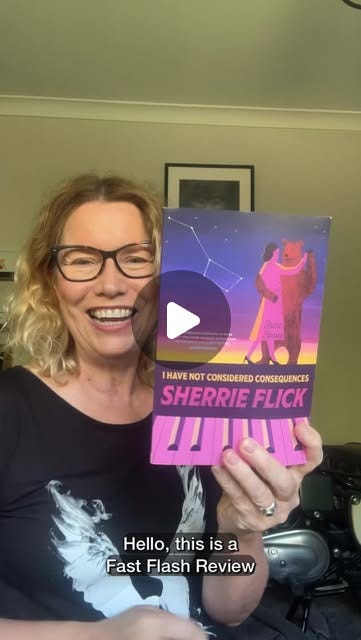
And here is the Instagram review we watched on Flick’s flash collection in case it’s helpful: