
Time to Make a Choice
Week 8, Spring 2026

Um, guys, I don’t know if you realize this, but spring break is next week. Spring break also marks the halfway point in the semester. As you can tell by the subtitle of this post, we are embarking on week 8 of our 16 week course. We began our semester with ice, now we’ve got the thunderstorms. Bet that we’ll have a nice drought warming up by the time Week 16 rolls around.
Now We Write
Now that we have a couple of Unit 2 short stories behind us, let’s talk about your writing assignment. This week, you are turning in a plan/prewriting assignment from your comp books. The week after Spring Break, your first draft is due. The week after that, your second draft.
For this writing assignment, you will need to make a choice: you will either be writing an analytical paper in academic structure, or you will be writing a creative piece of short fiction. Let’s take a closer look at each of these assignments so you can make an informed decision.
A few guidelines that are true of both essays:
You are required to draft your entire essay in one Google Doc.
When you turn in your drafts, you will need to submit the link to the Google Doc where you drafted it. I want access to the version history, which will tell me how long you spent on the assignment, how many separate writing sessions you had, and whether or not you copied and pasted your essay from an outside source, like, say, I don’t know, generative AI.
There will be no word limit or word max. We’re free falling, here.
Option 1: Analytical Essay
For this essay, you will be writing a literary analysis comparing/connecting one of the narratives we’ve read this semester with one of the three narrative structures we discussed last week. The final draft of this essay will assessed on the following rubric categories:
Structure
Insight
Since this is an analytical essay (versus a research paper), you only need to have one entry on your Works Cited page: namely, the piece of literature you are analyzing. If you find that your thesis calls for additional research (like primary research, not other people’s ideas about the text), then you can have other entries, but they are optional, and in most cases, unnecessary.
When you choose a narrative to analyze, you can of course choose any of the three short stories we’ve read together, including this week’s Saunders. But, you can also choose some of the poems and songs from Unit 1: “The General,” “Viva la Vida,” “The Allegory of the Cave,” and “I Wandered Lonely as a Cloud” all employ narrative structure to some extent.
If you choose this option, your planning/prewriting assignment will take the form of an outline.
Option 2: Creative Work
Maybe, maybe, you are a creative type. Maybe you want to tell your own story instead of dissecting someone else’s. Now is your time. Instead of writing an analytical essay, you can write me a story. The story can be fiction or nonfiction, but it must reflect one of the three narrative structures we discussed in some kind of way. If you choose this option, I will assess your story on the following rubric categories:
Stasis (things were one way)
Conflict (something happens)
Change (things were a different way)
Development
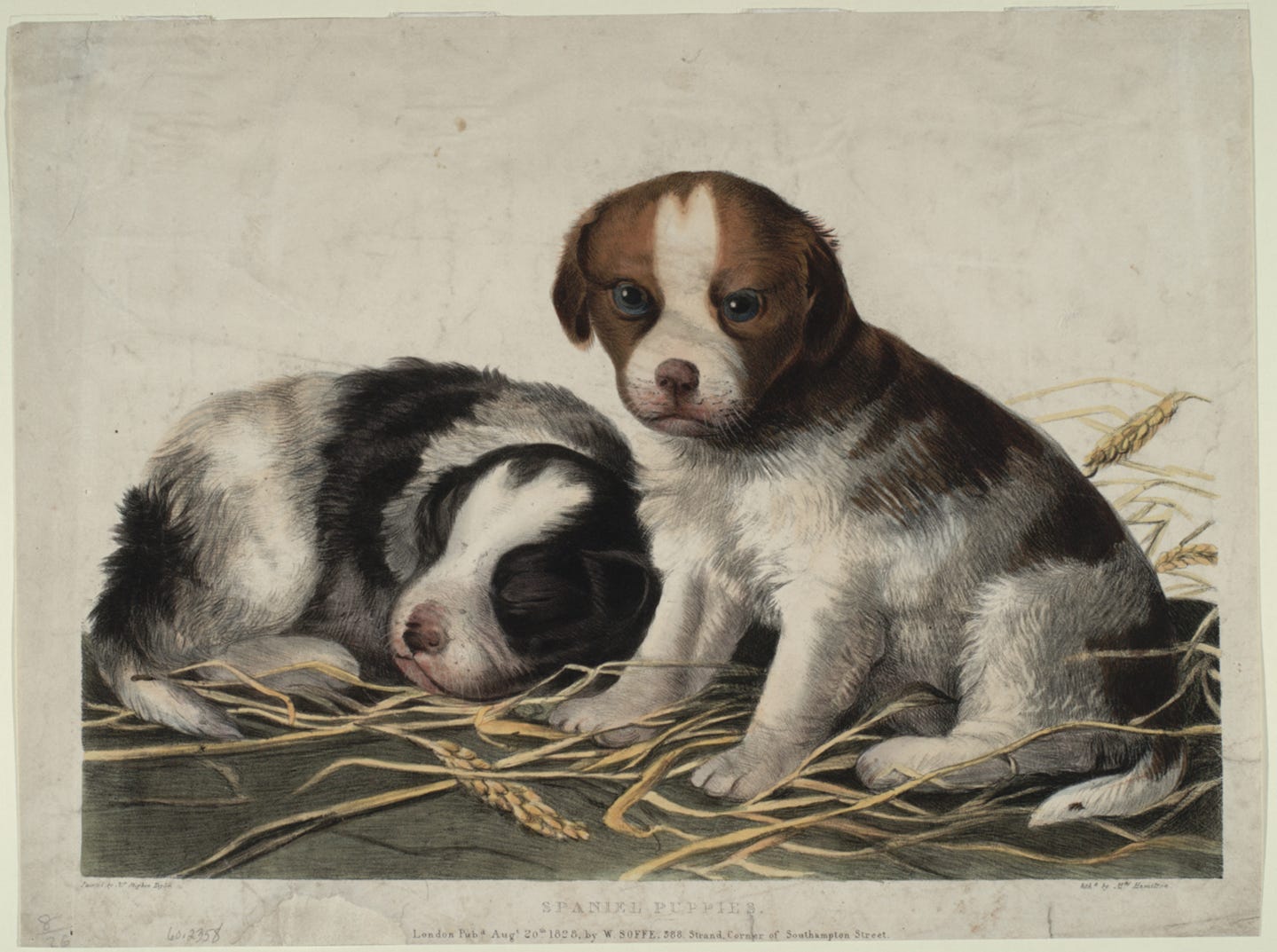
“PUPPY” by George Saunders
This week, we’ll be taking it home to Texas. And we’ll be seeing Texas through the eyes of not one, but two different narrators. The POV is third person, but the narrative distance is very, very close, like maybe closer than first person would be. In other words, I think you could argue that the reader knows more about the characters and gets closer to their minds than even the characters themselves.
One of the really great things about reading contemporary lit is that the author is still alive and kicking and part of the same world we are living in day by day. George1, for example, is currently doing his press tour for his latest book, Vigil. If you were on the fence about attempting your own story, maybe good old George will give you inspiration you need. Let’s take a little 8 minute late night show peak into his writing process and his thoughts on the value he sees in fiction in times like these:
PS, this is neither here nor there, but I consider George to be one of my own writing teachers, even though he has no idea who I am. He teaches an at extremely, extremely exclusive creative writing program at Syracuse University, but he has democratized his knowledge for plebes like myself in his excellent craft book A Swim in a Pond in the Rain and his own Substack.
Thank you for the options!